Moving into Your Apartment or Unit

Moving into your first off-campus home can feel overwhelming. These tips can help you stay organized and start your rental experience on the right foot.


Document the condition of the unit/apartment 

On move-in day be sure to take photos of any damage you notice to the building, applicants or furnishings. This help prevent the landlord or property manager from blaming you or your roommates. This can save you money on any potential repairs when you move out. Keep all communication between yourself and the landlord in writing. 
 

Take out renters' insurance 

This might seem like an unnecessary expense but it could save you a lot of money. Getting cover with renters' insurance will protect you in the event your belongings are lost or damaged due to fire, a natural disaster or theft. Call a few different insurance companies in London to find the best quote and coverage for your needs. 
 

Hiring movers 

Depending on the location, how much stuff or help you have, you may want to consider hiring a moving company to assist with your move. Before booking anyone, we recommend doing your research into a few different companies before making your decision.  
 

Set rules with your roommates 

Living off campus is a little different from living in residence or at home with the amount of freedom you have. To help avoid any potential conflicts, we suggest setting expectations or standards of living before your move-in day. You should consider how you want to split the bills and chores, expectations on quiet hours and any guidelines for guests. We do provide a roommate agreement template that could be helpful in these situations.  



Moving out of Your Apartment or Unit

Moving out involves more than packing boxes. Use these tips to avoid common issues and complete your move with confidence.


Give appropriate notice 

Majority of landlords/property managers require 60 days’ notice prior to you moving out, before your lease ends. You can do this by submitting a Notice to End Tenancy Form to your landlord/property manager. Giving the appropriate notice is important because you could be liable to pay two additional month’s rent if you move-out without notice. It is important to note, you cannot give notice at anytime to leave, when in a fixed term contract you are responsible for the whole lease term. 
 

Fix damages 

To ensure you are not charged for any damages above normal wear and tear, you will need to fix/undo any damage you caused. This could be filling in holes left from those posters you put on the wall or touching up any scratches/dents. If you are subletting, you could be responsible for damages caused by your sub tenant as well.  
 

Prepare two weeks early 

It is recommended that a couple weeks before you’re supposed to move-out that you start decluttering and packing up your unit/apartment. There’s a lot more to moving out than just placing your belongings into boxes. You’ll want to take inventory of who owns what, what everyone is keeping, selling or giving away. If you pay for utilities directly, you will want to notify them that you're moving and if necessary, provide your new address so services don’t get interrupted. 
 

Complete walkthrough 

Before hopping in your car and driving away, do a final walkthrough and ensure everything is gone and there’s no new damage. If everything is all set, let you landlord/property manager know the place is vacant and return your key. It’s a good idea to take pictures of how you are leaving the property. 

Other Off-Campus Resources

Image
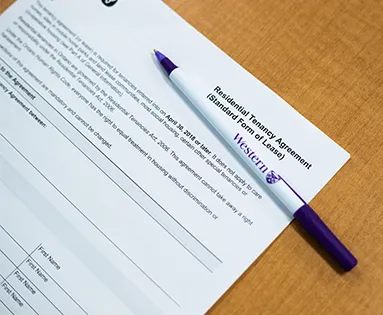
Pen on top of a rental agreement

Renting and Leasing

Helpful guidance on rental costs, key considerations and what students should ask before signing.

Image
Two students sitting around a tree

Living in London

Key information on bylaws, neighbourhood resources and tenant rights.

Image
View of two people sitting at a table with pens and paper

Tools and Templates

Downloadable resources to help students navigate off-campus living, including roommate agreements, sublet agreements and more.